
What the Barrie & Community Family Health Team Cyber Incident Really Cost, and What Leaders Can Learn
The Barrie & Community Family Health Team cyber incident did not involve dramatic headlines or public ransom demands.
What it did involve was patient data, regulatory exposure, operational disruption, and real financial cost — the kind that rarely shows up in press releases but always shows up later in budgets.
In March 2024, the Barrie & Community Family Health Team disclosed a cybersecurity incident involving unauthorized access to patient information across its primary-care network in Ontario.
While the organization did not publicly confirm ransomware, the timeline, response actions, and notification requirements align closely with ransomware-style or data-exfiltration incidents increasingly affecting Canadian healthcare.
This case study looks at what happened, what it likely cost, and why “quiet” healthcare cyber incidents are often far more expensive than they appear.
What Happened: Timeline of the Incident
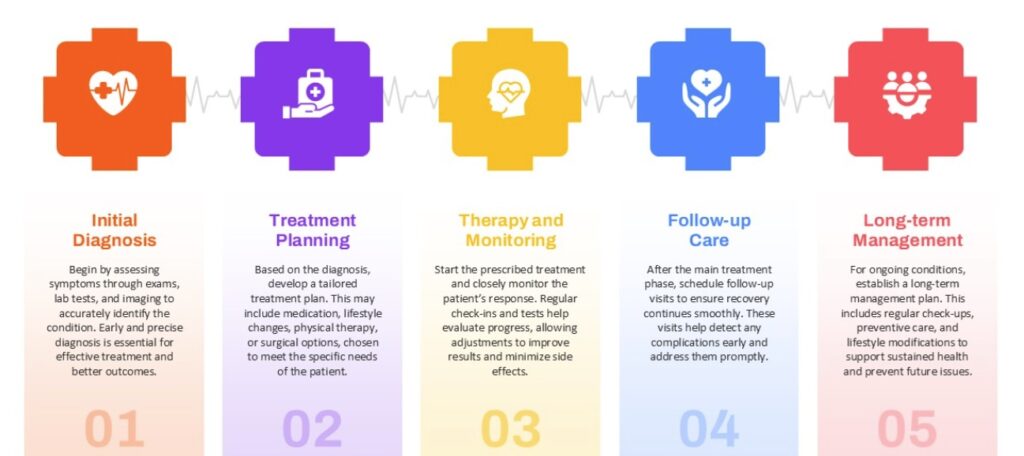
Under Ontario’s PHIPA framework, notification alone confirms that the incident met the threshold of real risk of significant harm, not a minor IT issue.
The Data at Risk (What Actually Matters)
Although Barrie & Community Family Health Team did not publish exact figures, Family Health Teams typically store:
- Patient names, addresses, and dates of birth.
- Ontario Health Card numbers.
- Clinical notes and diagnoses.
- Prescription and referral information.
- Provider and clinic identifiers.
For a multi-clinic Family Health Team, this can represent tens of thousands of patient records accumulated over many years.
On dark-web markets, healthcare records routinely command $50–$250 per record, depending on completeness.
Even conservative exposure scenarios carry serious downstream risk.
The Financial Reality of a “Non-Ransomware” Healthcare Incident
No ransom payment was publicly disclosed, but that does not mean the incident was inexpensive.
Based on industry benchmarks for Canadian healthcare breaches of similar scope, reasonable cost ranges include:
Incident Response & Forensics
- External cyber forensics: $150,000 – $300,000.
- Legal & privacy counsel: $75,000 – $150,000.
Notification & Compliance
- Patient notifications and call-centre support: $50,000 – $120,000.
- Regulatory reporting, audits, and documentation: $25,000 – $75,000.
IT Remediation & Security Improvements
- System rebuilds, hardening, monitoring tools: $200,000 – $500,000.
- Backup validation, identity controls, segmentation work: $100,000 – $250,000.
Estimated Total Impact
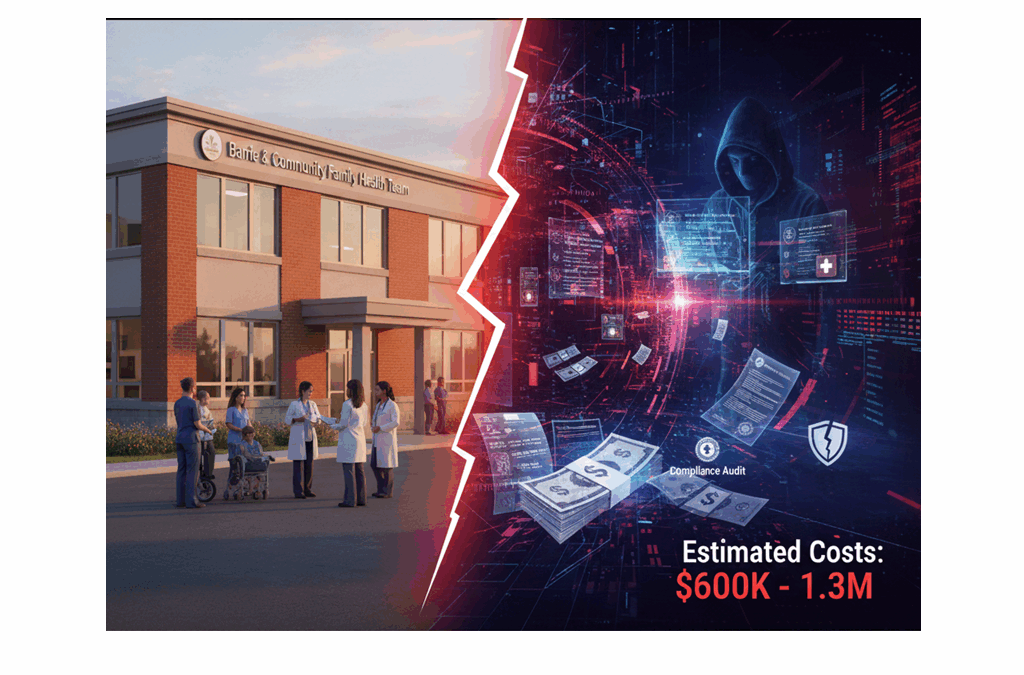
$600,000 to $1.3 million, excluding long-term operational drag and reputational damage.
For a primary-care organization, that is not a rounding error. It is a material financial event.
The Operational Cost No One Budgets For
Beyond invoices, the organization absorbed:
- Weeks of staff time diverted to incident management.
- Slower clinical and administrative workflows.
- Leadership time is spent on regulators rather than on care delivery.
- Ongoing security and governance obligations that did not exist before.
Cyber incidents do not end when systems come back online.
They reshape how the organization operates going forward.
What Likely Went Wrong (Based on Healthcare Patterns)
Barrie & Community Family Health Team did not disclose technical root causes. However, Canadian healthcare incidents with similar profiles almost always involve some combination of:
- Incomplete or inconsistently enforced MFA.
- Excessive access privileges across systems.
- Flat networks enable lateral movement.
- Backup strategies are not fully isolated or tested.
- Overconfidence in vendors or shared platforms.
These are not advanced failures. They are baseline control gaps.
Key Lessons for Healthcare and Business Leaders
Quiet incidents are still expensive incidents.
The absence of a ransom demand does not mean limited damage.
Regulatory thresholds matter.
Notification under PHIPA confirms material risk to individuals — and liability to the organization.
Healthcare data multiplies impact.
Clinical records create long-term exposure for patients and organizations alike.
Cybersecurity is a leadership responsibility.
Once regulators and lawyers are involved, the issue has already left IT’s hands.
The Barrie & Community Family Health Team cyber incident illustrates a reality many organizations underestimate:
Cyber risk does not require a catastrophe to be costly. It only requires exposure, obligation, and time.
Organizations that invest early in governance, identity controls, monitoring, and tested recovery spend far less and recover far faster than those forced to modernize under pressure.
Sources & Notes
This article is based on publicly available disclosures, Ontario privacy law requirements, and industry cost benchmarks for healthcare cybersecurity incidents (2024).
Financial figures are presented as conservative estimates for educational purposes and may vary as additional details emerge.